
Collection/harvesting, washing, drying, garbling, packaging and storage of NTFP and medicinal plants
Methods of collection/harvesting
- Handpicking: This method involves manually picking the plant parts, such as leaves, flowers, or roots, that are used for medicinal purposes. Care should be taken to avoid damaging the plant or its surrounding environment.
- Pruning: For certain perennial plants, such as herbs or shrubs, pruning can be used to harvest the medicinal parts while promoting plant growth and productivity.
Washing: Washing can be done by use of water or chemicals.
Drying and processing: After harvesting, medicinal plants are often dried to preserve them for future use. Drying methods vary depending on the plant species and may involve air-drying, sun-drying, or using drying racks or dehydrators. Once dried, the plants may be further processed, such as grinding into powder or making extracts.
Garbling is the process of stripping and shredding the useful medicinal leaves and flowers from the woody stems, resulting in a finished product that is uniform and easy to use.
Storage: Proper storage is essential to maintain the quality and potency of medicinal plants. Dried plant material should be stored in a cool, dry place away from sunlight and moisture to prevent mold or degradation. Storage can be done in steel bins, traditional storage bags etc.
Introduction to primary and secondary metabolites; types of secondary metabolites
Primary metabolites: Primary metabolites are kind of metabolite that are directly involved in normal growth, development, and reproduction. Also They usually perform a physiological function in the organism.
Secondary metabolites: Secondary metabolites are compounds that are not required for the growth or reproduction of an organism but are produced to confer a selective advantage to the organism.
Types of primary metabolites found in medicinal plants:
- Carbohydrates
- Protein
- Amino Acids
- Vitamins
- Nucleotides
- Organic acids
Major secondary metabolites found in Medicinal Plants
- Alkaloids: Alkaloids are nitrogen-containing compounds with diverse pharmacological activities. Examples include morphine from opium poppy (Papaver somniferum), quinine from cinchona (Cinchona spp.), and caffeine from coffee (Coffea spp.). Also Alkaloids have various effects on the human body, including analgesic, anti-inflammatory, and psychoactive properties.
- Terpenoids: Terpenoids are a large and structurally diverse class of compounds derived from isoprene units. Also They are found in essential oils and resinous exudates of many medicinal plants. Examples include menthol from peppermint (Mentha × piperita), artemisinin from sweet wormwood (Artemisia annua), and taxol from the Pacific yew tree (Taxus brevifolia). Also Terpenoids exhibit a wide range of pharmacological activities, including antimicrobial, anti-inflammatory, and anticancer properties.
- Phenolics: Phenolic compounds are antioxidants found in fruits, vegetables, and medicinal plants. They include flavonoids, phenolic acids, and tannins. Examples of medicinal plants rich in phenolic compounds include green tea (Camellia sinensis), ginkgo (Ginkgo biloba), and turmeric (Curcuma longa). Phenolic compounds have various health benefits, including antioxidant, anti-inflammatory, and cardioprotective effects.
- Glycosides: Glycosides are compounds formed by the attachment of sugar molecules to other chemical groups, such as alkaloids, flavonoids, or terpenoids. Also They are found in many medicinal plants and contribute to their pharmacological activities. Examples senna and cyanogenic glycosides from bitter almonds.
- Lignans: Lignans are phenolic compounds found in plants that have estrogenic and antioxidant properties. Also They are found in flaxseeds (Linum usitatissimum), sesame seeds (Sesamum indicum), and various medicinal herbs. Lignans have been studied for their potential role in hormone-related disorders, cardiovascular health, and cancer prevention.
Preparation of herbal infusions, decoctions, lotions, suppositories, tinctures, syrups, poultices, plasters, ointments, oils and salves
- Herbal Infusions: Infusions are made by steeping herbs in hot water. To prepare an herbal infusion, pour boiling water over dried or fresh herbs . let them steep for a certain amount of time (usually 5-15 minutes). The resulting liquid can be consumed as a tea.
- Decoctions: Decoctions are similar to infusions but involve boiling the herbs in water for a longer period of time to extract more concentrated compounds. To make a decoction, simmer the herbs in water for 15-30 minutes, then strain and drink the liquid.
- Lotions: Lotions are liquid preparations that are apply topically to the skin.Also They are typically made by mixing herbal extracts or infusions with a liquid base, such as water, alcohol, or oil. Lotions are commonly use for skin conditions or to soothe irritated skin.
- Suppositories: Suppositories are solid or semi-solid preparations that are insert into the body, usually rectally or vaginally. Also They are often make by mixing herbal extracts or powders with a base material, such as cocoa butter or beeswax, which melts at body temperature.
- Tinctures: Tinctures are concentrate liquid extracts made by soaking herbs in alcohol or another solvent. The alcohol extracts the active compounds from the herbs, resulting in a potent solution that can be taken orally or applied topically.
Others
- Syrups: Syrups are sweet, viscous liquids made by dissolving herbs or herbal extracts in a sugar or honey base. Also They are often use to mask the bitter taste of certain herbs and can be taken orally to soothe coughs or sore throats.
- Poultices: Poultices are soft, moist preparations made by applying crushed or powdered herbs directly to the skin. They are commonly use to treat bruises, sprains, or skin irritations and are held in place with a bandage or cloth.
- Plasters: Plasters are similar to poultices but are make with a thicker, more adhesive base, such as clay or resin. They are applly to the skin and left in place for an extended period of time to provide continuous relief or treatment.
- Ointments: Ointments are semi-solid preparations make by mixing herbal extracts or powders with a base material, such as petroleum jelly . Also They are commonly use for topical application to treat skin conditions or wounds.
- Oils and Salves: Oils and salves are similar to ointments but have a higher proportion of oil in their base. AlsoThey are often use for massager the skin and can be infuse with herbal extracts for added therapeutic benefits.
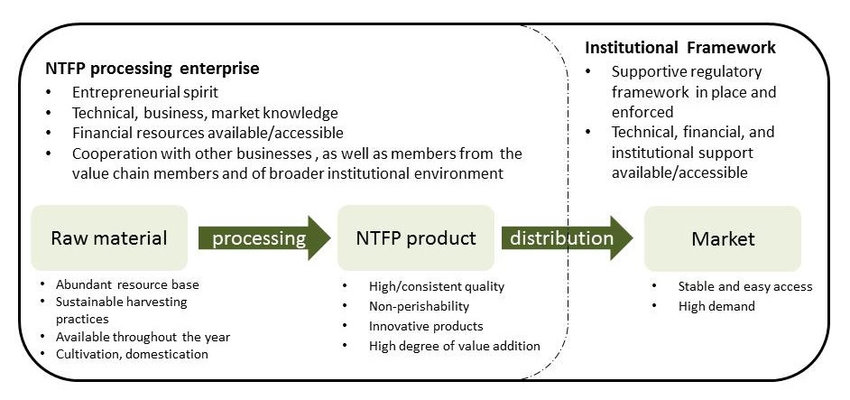
Value addition and enterprise development of NTFP
Value addition and enterprise development of non-timber forest products (NTFPs) involve enhancing the economic value of these resources. Through various processing, marketing, and business development activities.