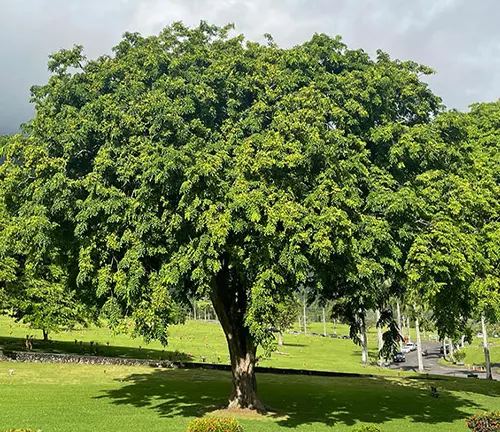
The Narra tree is a magnificent hardwood species native to Southeast Asia, widely valued for its durability, medicinal value, and ornamental appeal. Known as the national tree of the Philippines, the Narra is a source of pride, heritage, and environmental importance.
In this guide, we explore the characteristics, botanical features, traditional and modern uses, and harvesting practices of the Narra tree.
📋 Overview of the Narra Tree
| Feature | Detail |
|---|---|
| Common Name | Narra Tree |
| Scientific Name | Pterocarpus indicus |
| Family | Fabaceae (Legume family) |
| Type | Deciduous tropical hardwood |
| Native To | Southeast Asia and Pacific Islands |
| Status | Protected/Endangered in some regions |
🌿 Characteristics of the Narra Tree
✅ Appearance:
- Height: Grows up to 30–40 meters (100–130 ft)
- Trunk: Tall, straight, and cylindrical; dark brown bark with deep fissures
- Leaves: Pinnate with 5–12 pairs of oblong leaflets
- Flowers: Fragrant, bright yellow blossoms that bloom in clusters in early summer
- Fruit: Small, round winged pods containing seeds
✅ Growth Habits:
- Thrives in humid tropical climates
- Grows best in well-drained, loamy soils
- Moderate to fast growth rate
🔬 Botany of Narra (Pterocarpus indicus)
- Genus: Pterocarpus (meaning “winged fruit”)
- Fixes nitrogen in the soil through symbiotic relationships with rhizobia
- Produces a red-colored resin called kino, used in dyes and traditional medicine
- Flowers are papilionaceous (typical of the pea family)
🌍 Ecological Importance
- Erosion Control: Deep roots prevent soil erosion
- Shade Provider: Commonly planted in parks and roadsides
- Biodiversity Support: Offers habitat and food for pollinators and birds
🪵 Uses of Narra Tree
🌳 Timber:
- Highly valued hardwood known for:
- Rich red to golden brown grain
- Termite- and rot-resistance
- Used for furniture, flooring, cabinetry, and carving
- Also called “Philippine Mahogany” in trade
🌿 Medicinal:
- Bark, roots, and leaves are used in traditional medicine for:
- Anti-inflammatory and diuretic properties
- Treating ulcers, diabetes, and skin conditions
🌼 Cultural:
- Used in temples, religious structures, and ceremonial artifacts
- Symbol of strength, resilience, and national pride in Filipino culture
💡 Other Uses:
- Natural dye from red resin (kino)
- Ornamental tree in landscapes and gardens
🌾 Harvesting and Conservation
🌲 Harvesting Practices:
- Sustainable logging is crucial due to its slow regeneration
- Trees are typically harvested after 20–30 years
- Timber is air-dried and cured before use in carpentry
🚫 Conservation Concerns:
- Overexploitation and habitat loss have made Narra endangered in parts of Southeast Asia
- Listed in Appendix II of CITES (Convention on International Trade in Endangered Species)
✅ Sustainable Solutions:
- Promoting community forestry programs
- Encouraging reforestation and nursery cultivation
- Enforcing government protections and harvesting regulations
🇵🇭 Narra as the National Tree of the Philippines
Chosen for its strength, beauty, and value, the Narra tree symbolizes:
- Heroism and resilience of the Filipino people
- Cultural heritage and environmental responsibility
- Endurance and dignity in tropical landscapes
🌟 Final Thoughts
The Narra tree is more than a source of wood—it’s a living treasure of ecological, medicinal, and cultural significance. From its golden flowers to its strong, majestic trunk, this tree plays an essential role in biodiversity, sustainable craftsmanship, and heritage conservation.
By supporting conservation and responsible harvesting, we ensure that future generations can continue to enjoy the timeless beauty and benefits of the Narra.
🏷️ SEO Keywords:
- Narra trees uses and benefits
- Narra trees botanical features
- Pterocarpus indicus timber
- National tree of the Philippines
- Narra trees harvesting methods